Author: MX Academy

Click on any of the course titles below to reveal full details.

Course Contents

Emergency landing techniques
Training Duration: 1 Week (3 – 5 hours per day)
Safety regulations for drones
Pre-flight preparation
Caliberation
Battery check
Motor check
Working with GPS
Risk Assessment
Multicopter drone flight practice
Take off techniques
Landing techniques
Flight maneuvers – Controls
Working with the drone camera

Training Duration: 1 Week (3 – 5 hours per day
Fee: N500,000

Advanced Multi-Rotor Drone Operations Course

COURSE CONTENTS
PART 1

  1. Safety regulations for drones
  2. Pre-flight preparation
  • GPS Calliberation
  • Battery check
  • Motor check
  1. Working with GPS
  2. Risk Assessment
  3. Multicopter flight simulation
  4. Launching the drone under normal circumstances
  5. Landing the drone under normal circumstances
  6. Flight manouvers and Controls
  7. Working with the drone camera
    10 Performing aerial Surveillance
  8. Emergency drone retrieval techniques.
    [How to get the drone back safely when there is a signal loss or interference]

PART 2 [Advanced]

  1. Changing factory settings and customizing the operational capabilities to suit your needs
  2. Advance flying manoeuvres.
  3. Simultaneously controlling the aircraft while operating the camera (taking still shots)
  4. Simultaneously controlling the aircraft while operating the camera (aiming the camera at
    a particular object/subject while the drone is flying).
  5. How to maintain orientation when flying the aircraft
  6. Emergency Take Off Techniques: How to take off in a bad landscape
  7. How to set the aircraft to return to take off point automatically without additional inputs
    by the pilot
  8. How to set the aircraft to follow a subject (e.g a car, dog, human e.t.c.) without being
    controlled by a pilot
  9. Best practices for conducting aerial surveillance
  10. More and more practical flights with the multicopter unit.
  11. Knowing your flight distance and altitudes
  12. Emergency take off and landing techniques.

    Duration: 3 Weeks
    Fee: Eight Hundred Thousand Naira
    Two Thousand US Dollars

PART 1

  1. Safety regulations for drones
  2. Pre-flight preparation
  • GPS Caliberation
  • Battery check
  • Motor check
  1. Working with GPS
  2. Risk Assessment
  3. Multicopter flight simulation
  4. Take off techniques
  5. Landing techniques
  6. Flight manouvers and Controls
  7. Working with the drone camera
    8 Performing aerial Surveillance
  8. Emergency drone retrieval techniques. [How to get the drone back safely when there is
    a signal loss or interference]

    PART 2 [Advanced]

  9. Changing factory settings and customizing the operational capabilities to suit your needs
  10. Advance flying manoeuvres.
  11. Simultaneously controlling the aircraft while operating the camera (taking still shots)4.
    Simultaneously controlling the aircraft while operating the camera (aiming the camera at a
    particular object/subject while the drone is flying).
  12. How to maintain orientation when flying the aircraft6. Emergency Take Off Techniques:
    How to take off in a bad landscape.
  13. How to set the aircraft to return to take off point automatically without additional inputs
    by the pilot
  14. How to set the aircraft to follow a subject (e.g a car, dog, human e.t.c.) without being
    controlled by a pilot
  15. Best practices for conducting aerial surveillance.
  16. More and more practical flights with the multi-copter unit.
  17. Knowing your flight distance and altitudes.
  18. Emergency take off and landing techniques.

    Training Duration: 3 – 4 Weeks

This training series is designed to take learners from beginner to advanced levels in drone
technology. Each module focuses on a specific area, providing theoretical and practical
knowledge. The series is structured to be engaging, interactive, and accessible to al
learners. All aspects of drone technology is covered in this program.
Lecture Delivery: The delivery format for this training is virtual/online.
Duration: 6 – 8 Weeks

Module 1. Introduction to Drones

  • History and evolution of drones
  • Classification of drones according to wing type
  • Classification of drones according to use

    Module 2. Components of a Drone and their functions

  • The transmitter
  • External parts of a drone and their functions
  • Internal parts of a drone and their functions

    Module 3. General Uses of Drones (UAVs)

  1. Security & Surveillance
  2. Agriculture & Farming
  3. Filmmaking & Photography
  4. Infrastructure & Construction
  5. Delivery & Logistics
  6. Emergency Response & Disaster Management
  7. Environmental Monitoring & Conservation
  8. Energy & Utilities
  9. Transportation & Urban Planning
  10. Military & Defense
  11. Education & Research
  12. Mining & Oil Exploration
  13. Insurance & Real Estate
  14. Law Enforcement & Public Safety
  15. Sports & Entertainment

    Module 4. Aerodynamics & Basic Flight Principles

  • Fundamentals of aerodynamics
  • Drone lift, balance, and stability
  • Flight modes and control systems

    Module 5. Drone Operation Techniques

  • Pre-flight checks and safety protocols
  • How to caliberate the GPS Compass
  • Basic piloting skills: takeoff, hovering, landing
  • Drone regulations and airspace awareness
    Module 6. Advanced Flight Techniques
  • Aerial photography and videography
  • First Person View (FPV) flying & racing
  • GPS, waypoint navigation, and autonomous flight

    Module 7. Drone Design & Engineering

  • Principles of drone design and aerodynamics
  • Materials selection for performance
  • Designing and prototyping custom drones
    Module 8. Electronics & Software
  • Flight controllers, sensors, and ESCs
  • Popular drone softwares for operating drones
  • Telemetry, mapping, and data analysis

    Module 9. Emergency Retrieval of Drones

  • Introduction
  • Causes of Emergency Retrieval Situations
  • Emergency Retrieval Techniques
  • Safety Precautions During Retrieval
  • Best Practices for Prevention

    Module 10. Maintenance & Troubleshooting of Drones

  • Routine maintenance and battery care
  • Common issues and troubleshooting methods
  • Upgrading and modifying drone components

    Module 11: Mitigating Drone Threats with Drone Jamming Technology

  • Introduction to Drone Jamming
  • Understanding Drone Jamming Technology
  • Types of Drone Jamming Techniques
  • Applications of Drone Jamming
  • Challenges & Limitations
  • Future of Anti-Drone Systems

    Module 12. Future of Drone Technology

  • Emerging trends: AI, automation, battery innovation
  • Applications of AI in drones
  • Ethics, privacy, and future regulations
    Module 13. Assessment & Certification
    Course Info:
    Duration of course: 4 – 8 Weeks

Duration: 6 – 8 Weeks
Fee: 3 Million Naira
Three Thousand US Dollars

Drone Designing, Assembling & Configuration

Requirements
Participants should already have basic knowledge of drone piloting else will have to take the
1 Week Standard Drone Piloting Course first as a pre-requisite.
Course Outline

  1. Drone/UAV technology overview
  2. Types of drones
  3. UAV Functions & industry usage
  4. Power sources
  5. Parts of a drone
  6. Transmitters and receivers
  7. Types of Transmitters
  8. Functions of the different parts of a drone
  9. Designing an unmanned aerial system
  10. The MX Academy Rules of designing a drone
  11. Assembling a drone
  12. How to Invert the direction of the motors using ESCs
  13. How to Install gps compass
  14. Finalizing the assembling
  15. Configuring the drone
  16. Test flight
  17. Observations
  18. Extending the functionalities of a UAV.
  19. Things that can be attached and why.
  20. Types of imaging systems for drones

    Project
    Build a drone from scratch.
    Questions & answer session.
    DURATION OF TRAINING: 4 – 6 hours a day

Overview: 
This training program is designed for individuals interested in becoming experts in renewable energy, specifically in solar inverter power systems. Participants will learn how to design, assemble, and install solar inverter electricity power systems suitable for residential and commercial applications.

What You Will Learn:

  • Fundamentals of electricity and electronics.
  • Types and specifications of solar panels and batteries.
  • Practical skills in working with batteries, inverters, solar panels, and charge controllers.
  • Step-by-step guidance on setting up solar inverter power systems.
  • Business insights for starting your own solar inverter power system business.

Available Classes:

The training is divided into two main parts:

  1. Physical Class in Calabar [Accommodation is available]
  2. Virtual [Online] Class

Training Duration : 1 to 2 Weeks.

Certificates will be issued to participants.

Class 1:

Beginner Solar Power System Design

Course Outline:

Lesson 1: Electricity/Electronics Fundamentals

  • Introduction to basic electrical concepts.
  • Overview of solar panels: types, voltage, and wattages.
  • Overview of batteries: types, voltage, and wattages.

Lesson 2: Working With Batteries

  • Understanding battery terminals and polarity.
  • Techniques for parallel and series connections.
  • How to interpret battery level readings.

Lesson 3: Working With Inverters

  • Types of inverters and their applications.
  • Step-by-step guide on how to connect inverters.

Lesson 4: Working With Solar Panels

  • Types of solar panels and their characteristics.
  • Best practices for handling solar panels.
  • Instructions on how to connect solar panels.

Lesson 5: Working With Charge Controllers

  • Types of charge controllers and their functions.
  • How to connect charge controllers.
  • Reading and interpreting charge controller data.

Lesson 6: Designing and Setting Up Low Capacity Solar Power Systems

  • Step-by-step design of a 12 Volts 1KVA solar power systems.
  • Step-by-step design of a 24 Volts 2KVA solar power systems.
  • Step-by-step design of a 24 Volts 4KVA solar power systems.
  • Step by-step design of a 48 Volts 5KVA solar power systems
  • Common mistakes to avoid during installation.
  • Final thoughts and best practices for successful installations.

Business Class:

  • Market Analysis: Understanding the renewable energy market and identifying opportunities.
  • Business Planning: Creating a business plan for your solar inverter power system business.
  • Marketing Strategies: Effective marketing techniques to attract customers.
  • Customer Service: Best practices for providing excellent customer support.
  • Regulatory Compliance: Understanding local regulations and compliance requirements for solar installations.

Interactive Learning:

Q&A sessions with the lecturer to clarify doubts and enhance understanding.
Access to an online training platform for interaction with fellow students.
Fees: N 300,000 for Online Class,
N 600,000 for Physical Class

Empower Your Organization with Cybersecurity Awareness Training

In today’s digital landscape, Nigerian businesses and government institutions face unprecedented cyber threats. Safeguarding your organization against these risks requires more than just technology—it demands a vigilant and well-prepared workforce. Introducing MX Academy Technical, your partner in building a cyber-resilient future through comprehensive cybersecurity awareness training.

Addressing Urgent Needs

The surge in cyber threats targeting Nigerian entities underscores the critical need for proactive cybersecurity measures. MX Academy’s tailored training programs empower your team to identify, assess, and mitigate evolving cyber risks. By fostering a culture of cyber vigilance, we help fortify your organization’s defenses from within.

Supporting Digital Transformation

As Nigerian businesses embrace digital transformation, the demand for cybersecurity expertise has never been greater. MX Academy equips your workforce with essential cybersecurity skills, ensuring your digital assets remain secure while adhering to international security standards.

Driving Economic Growth

Cybersecurity isn’t just a safeguard—it’s a catalyst for economic growth. MX Academy’s training programs not only mitigate risks but also cultivate a skilled cybersecurity workforce. Join us in shaping Nigeria’s cybersecurity future, driving innovation, and creating new opportunities in this burgeoning sector.

Secure Your Future Today With MX Academy Cyber Security Awareness Training

Don’t wait for cyber threats to strike.

Partner with MX Academy and elevate your organization’s cybersecurity posture.

Together, let’s build a resilient future where digital transformation thrives securely.

Contact us today to learn more about our cybersecurity awareness training solutions tailored for Nigerian organizations.

Protect your business. Empower your team. MX Academy is your trusted cybersecurity partner.

Here are a list of our Creative/Arts Courses. Click on anyone to reveal full details.

This course is for aspiring filmmakers/multimedia proffessionals. No prior multimedia knowledge is required for this course. 
You will be taught everything from the scratch.

Requirements
A laptop computer that meets the requirements on our requirements page.
Ability to take lessons in English language

Course Contents

SESSION 1: 
PHOTOGRAPHY & CINEMATOGRAPHY


  1. Digital Photography
  2. Cinematography & Advance Camera techniques with sliders, 
dollies and multi-axis electronic camera stabilisers

SESSION 2: 
DIRECTING & LIGHTING

  1. Directing for movies
  2. Directing for music videos,
  3. Directing for documentaries
  4. Lighting

SESSION 3: 
POST PRODUCTION

  1. Video Editing
  2. Colour Grading
  3. Motion Graphics Animation
  4. Preparing videos for online Streaming and playback on different devices

TUITION FEE:
One Thousand US Dollars (1,000 USD)
Six Hundred Thousand Naira (N600,000).

DURATION: 6 Weeks 
(Weekdays: Mondays – Thursdays 10am – 4pm)

Online Classes: Available for this course
Serviced Accommodation Fee: N50,000 (100 USD) per month
Payment Plans: Three installments accepted
Internship (Optional): Up to 3 Weeks


Register For This Course Now >>

This course is for aspiring filmmakers/multimedia proffessionals. No prior multimedia knowledge is required for this course. 
You will be taught everything from the scratch.

Requirements
A laptop computer that meets the requirements on our requirements page.
Ability to take lessons in English language

Course Contents

SESSION 1: 
PHOTOGRAPHY & CINEMATOGRAPHY


  1. Digital Photography
  2. Cinematography & Advance Camera techniques with sliders, 
dollies and multi-axis electronic camera stabilisers

SESSION 2: 
DIRECTING & LIGHTING

  1. Directing for movies
  2. Directing for music videos,
  3. Directing for documentaries
  4. Lighting

SESSION 3: SCRIPT WRITING


  1. How to write a movie script
  2. How to write a music video script
  3. How to write an advert video script
  4. How to write a documentary video script

SESSION 4: 
POST PRODUCTION

  1. Video Editing
  2. Colour Grading
  3. Motion Graphics Animation
  4. Preparing videos for online Streaming and playback on different devices
  • SESSION 5: 
DRONE PILOTING
  1. Safety regulations for drones and remotely controlled aircrafts (RPAs)
  2. Pre – flight preparations
  3. Flight simulation for multicopters
  4. Drone Set up and GPS Calibration
  5. Flight Techniques
  6. Pairing and controlling the aircraft with a mobile device
  7. Emergency landing techniques
  8. Directing and shooting cinematic aerial shots – practice

TUITION FEE:

Two Thousand US Dollars (2,000 USD)
One Million Five Hundred Thousand Naira (N1,200,000).

DURATION: 3 Months 
(Weekdays: Mondays – Thursdays 10am – 4pm)
(Weekend Classes: Not Available for this course)
(Online Classes: Not Available for this course)

Serviced Accommodation Fee: N50,000 (100 USD) per month
Payment Plans: Three installments accepted

Internship (Optional): Up to 3 Months

Register For This Course Now >>

This certification program is intended for those with a passion for film-making, music video production, documentary and TV production.

It covers a wide range of topics under the following courses;

Course Contents

1. Digital Photography

2. Cinematography/Advance Camera Techniques

3. Directing for Film & Documentaries

4. Directing for Music Videos

5. Motion Graphics Animation

6. Video Editing.

7. Drone Piloting

DURATION:

Training Duration: 3 Months

FEE: 2,000 US Dollars.

N1,500,000

This course is for aspiring filmmakers/multimedia proffessionals. No prior multimedia knowledge is required for this course. You will taught everything from the scratch.

Requirements
A laptop computer that meets the requirements on our requirements page.
Ability to take lessons in English language

Course Contents

SESSION 1 : PHOTOGRAPHY & CINEMATOGRAPHY

1. Digital Photography
2. Cinematography & Advance Camera techniques with sliders, dollies and multi-axis electronic camera stabilisers.

SESSION 2: DIRECTING & LIGHTING

  1. Directing for movies
  2. Directing for music videos,
  3. Directing for documentaries
  4. Lighting

SESSION 3 : POST PRODUCTION

  1. Video Editing
  2. Colour Grading
  3. Motion Graphics Animation
  4. Preparing videos for online Streaming and playback on different devices

SESSION 4 : ADVANCE CINEMATICS


1. Thinking in Graphics (Advance Graphics & Branding Class) – theory & practice

2. Advance Colour Correction – Practice
3. Advance Camera Settings & Operations – practice
4. Setting up and balancing motorized multi-axis camera stabilizers – practice
5. Advance Cinematic Shots – Practice
6. Directing multi camera scenes for TVs, movies and reality shows – practice
7. Directing music video scenes – practice
8. Music Video tips & tricks (concepts, camera movements and editing styles)
9. Directing Visual Effects scenes for music videos – practice
10. Camera Tracking (Visual Effects) – Practice
11. Computer Generated Visual Effects Development – practice
12. Advance Digital Video Editing – Practice
13. Encoding videos to different formats for use on various devices – practice

SESSION 5 : 2D GRAPHICS ANIMATION

  1. Creating and organizing your animation assets
  2. Creating graphics animations
  3. Adding voice over and background sounds to your graphics animation
  4. Encoding animation videos to different formats for use on various devices.

SESSION 6 : MEDIA CREATION WITH A.I.

  1. Creating Scenes with A.I.
  2. Creating Characters With A.I.
  3. Creating  voice over audio narrations with A.I.

SESSION 7 : DRONE PILOTING

1. Safety regulations for drones and remotely controlled aircrafts (RPAs)
2. Pre – flight preparations
3. Flight simulation for multicopters
4. Drone Set up and GPS Calibration
5. Flight Techniques
6. Pairing and controlling the aircraft with a mobile device
7. Emergency landing techniques
8. Directing and shooting cinematic aerial shots – practice

TUITION FEE:
Three Thousand Eight Hundred US Dollars (3,800 USD)
Two Million Six Hundred Thousand Naira (N2,200,000).

DURATION: 6 Months

Weekdays: Mondays – Thursdays 10am – 4pm
Online Classes: Not Available for this course
Serviced Accommodation Fee: N50,000 (100 USD) per month

Payment Plans: Three installments accepted
Internship (Optional): Up to 3 Months

Next Session Start Date: January 19, 2026.

>> Register For This Course Now

Become a certified Music Producer & Sound Engineer, join the MX Film & Multimedia Academy’s
4 Weeks Intensive Practical Music Production & Sound Engineering Training Boot Camp

Starting April 2023.
This certification program is intended for those with a passion for music production.
You will be taught how to create instrumentals, record audio, mix and master audio professionally.

Course Contents

  1. Introduction to Music production & Sound Engineering
  2. Creating Instrumentals from Scratch
  3. Arranging instrumentals
  4. Mixing and finalizing instrumentals
  5. Setting up up multi-track recording session
  6. Connecting mixers, microphones, guitars, workstations and other audio inputs
  7. Recording multi-track session audio
  8. Mixing


  9. 9.Mastering
  10. Saving and exporting your files to different formats. 

    Fee: N600,000

Duration: 8 Weeks

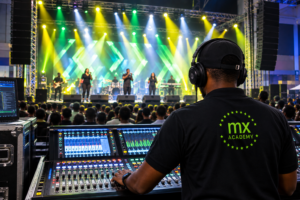
Become a Proffessional Live Sound Engineer & Live Music Producer with our properly designed Live Sound Engineering & Live Music Production training curriculum.

All the essential skills, techniques, tips and tricks required to get the best sound out of a live music production environment will be delivered to you.

Go From Zero to Hero

This training has been designed to get you started from scratch (no audio engineering knowledge) to advance audio engineering knowledge.

100% Hands -On Practical Training

Get Your Hands Busy with the mixing console and keep your ears buzzing with sound waves!

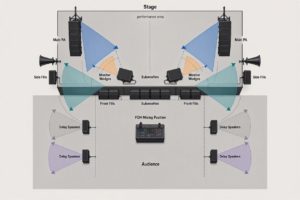
Learn to setup and control live audio performance from a live mixing console.

Get to know everything about live audio reinforcement and studio sound engineering.

Be The Angel Behind The Sound

The vocalists can have the best voice in the world, the saxophonist and drummer could be so energetic and the guitarist could be very creative. But if the sound engineer controlling the whole sound is wack or amateur, the whole performance could be a disaster.

Be the invisible performer behind the performance, the sound engineer behind the whole sound. Reinforce a live mix that brings out the bests of the performers and make the audience go wild!

Duration:

Weekdays : 6 Weeks (Mondays to Thursdays)


Fee:

Fee for International Students:  Two Thousand  Dollars (2,400 USD)

Nigerian Students: Five Hundred Thousand Naira. N1,200,000.

Module 1: Introduction to Audio & Sound Engineering (Week 1)

  • Fundamentals of Sound
    • Sound Waves: Frequency, Amplitude, and Wavelength
    • Understanding Audio Signals
  • Introduction to Sound Engineering
    • Roles of a Sound Engineer
    • Overview of Studio Equipment
  • Overview of Digital Audio Workstations (DAWs)

Module 2: Advanced Audio Engineering Works

  • Understanding the Four Factors that determines the quality of any audio sound
  • Deciphering Sound Waves
  • How to identify and modify audio frequencies.
  • How to achieve vocal softening by modifying the audio frequencies.
  • How to mix any sound by altering the audio frequencies
  • How to compress and limits sounds manually without using plugins
  • How to change the keys of an audio signal without using auto tune or dedicated plugins.

Module 3: Mixing Instrumentals

  • Mixing percussion sounds
  • Mixing kick drum sounds
  • Mixing virtual instruments soundsWorking with Synthesizers
    • How to synthesize sounds
  • How to modify audio samples in your DAW
  • Balancing Levels and Frequencies
    • Working with EQs
    • Adding Effects: Reverb, Delay, Compression, e.t.c
  • Automation : How to automate your mixes
  • Mastering instrumentals

Module 4: Setting Up and Recording a Multi-Track Session

  • Multi-Track Recording Basics
    Understanding Tracks and Channels
  • Connecting Equipment
    Mixers, Microphones, Instruments, and Audio Interfaces
  • Setting Up for Optimal Sound Capture
How to digitally pre-mix vocals before recording.

Module 5: Recording, Mixing, and Mastering

  • Recording Techniques
    • Capturing Clean Audio
    • Overdubbing and Layering
  • Mixing Tracks
    • Equalization (EQ) and Panning
    • Dynamic Processing: Compressors, Limiters
  • Mastering Basics
    • Preparing for Distribution
    • Volume Normalization and Polishing

Module 6: Saving and Exporting Your Work

  • Exporting in Different Formats
  • Preparing Tracks for Streaming and Distribution
  • Meta Tags:
  • Embedding additional information to your audio file.
  • How to embed album art to an audio file.
  • How to embed artist, composer and producer details to an audio file.TUITION FEE:
    One Thousand US Dollars (1,200 USD)
    Six Hundred Thousand Naira (N600,000).

    DURATION: 6 Weeks 
(Weekdays: Mondays – Thursdays 10am – 4pm)
    
Online Classes: Available for this course
    Serviced Accommodation Fee: N50,000 (100 USD) per month
    Internship (Optional): Up to 3 Weeks

Recent Comments

No comments to show.